
Skip to content

TESLA CAR SUBSCRIPTION

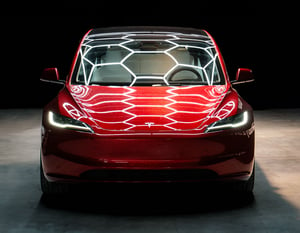
We offer various Tesla models and trims that are suitable for a Car Subscription.
Click on the model below that you want to know more about, or discover the benefits of Leasebooking with Full Operational Lease.

Want to drive a Tesla short term without paying benefit-in-kind tax on your private kilometres?
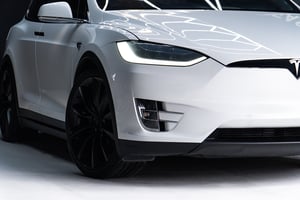
model x zoom
EU - All Models Tesla stock photo

COMPARE TESLA TRIMS

TESLA
MODEL 3
MODEL Y
MODEL S
MODEL X
Tax value
€ 42.490
€ 44.990
€ 92.990
€ 99.990
Per month from*
€ 880
€ 1.085
€ 1.595
€ 1.789
WLTP range
554 km
455 km
634 km
576 km
Real-world range
415 km
350 km
575 km
475 km
Acceleration 0-100 km/h
6.1 sec
6.9 sec
3.2 sec
3.9 sec
Top speed
201 km/h
217 km/h
250 km/h
250 km/h
Number of seats
5
5
5
5, 6 or 7
Expected delivery time
3 to 5 weeks
3 to 5 weeks
3 to 5 weeks
3 to 5 weeks
Drivetrain
Rear-wheel drive
Rear-wheel drive
All-wheel drive
All-wheel drive

*All prices and specifications shown are for the most affordable model in the line-up.

FSD training ProDrive-3

What does Leasebooking do?

 We connect you with high-quality used Teslas that have already proven themselves on the road. These are real cars in good technical condition, not unknown auction cars.

We check the battery health, driving history (where available) and overall condition before we offer a car. Teslas remain attractive to drive thanks to long battery life and continuous software updates. So you get the full Tesla experience without paying the new price.

You get an attractive monthly price for a car you can trust, without compromise.

Why choose a Tesla from Leasebooking?

  • Lower monthly costs than buying new

  • Short and flexible terms available

  • Realistic range: usually 300 to 500 km on a full charge (depending on model and driving style)

  • Clear price, no surprises

  • Guidance from real Tesla specialists

  • Personal service from first contact to delivery


FREQUENTLY ASKED QUESTIONS ABOUT PRIVATE LEASE

What is business electric leasing?

When you lease an electric car for business, a leasing company makes the car available to your company for a fixed monthly price. You can start using the car right away. Leasing a car has many advantages

First of all, you don't have to pay the full purchase price at once. This keeps your resources free for other business purposes. In addition, monthly lease costs are often clear and predictable, making it easy to plan your budget.

You also don't have to worry about things like maintenance, repairs and insurance, as these are often included in the lease contract. This saves you time and effort, and you can focus fully on your business activities. Leasing a car therefore offers flexibility, convenience and clarity for your business.

How does business leasing of an electric car work?
  1. Determining your needs: First you determine your company's needs. Think about the type of electric car you need, such as a passenger car, van or a specific make and model. Also consider things like the desired lease period, expected mileage and any specific requirements.
  2. Finding a leasing company: Look for reliable leasing companies that offer business car leasing. You can search online, ask for recommendations or contact other entrepreneurs for advice.
  3. Quotes and negotiation: Contact the leasing company and request a quote based on your specific needs.
  4. Acceptance: The leasing company assesses your application based on your company's details before the lease contract is drawn up.
  5. Signing the contract: If you agree to the lease terms, the leasing company will draw up a lease contract. Make sure you read and understand the contract thoroughly before signing it. The contract covers details such as the duration of the lease, the monthly payments, the mileage policy, insurance and any other conditions.
  6. Delivery of the electric car: After signing the lease contract, the car is ordered or delivered according to the agreed specifications. The leasing company ensures that the car is in good condition and ready for use.
  7. Payments and use: During the term of the lease contract you pay monthly lease costs to the leasing company. You can use the car according to the agreed terms, taking into account any restrictions such as mileage limits and maintenance requirements.
  8. Maintenance and insurance: Depending on the type of lease contract, maintenance and insurance services may be included. Consult the lease contract to understand your responsibilities and which services are covered by the leasing company.
  9. End of the lease contract: At the end of the lease period you usually return the car to the leasing company. Make sure you meet any return conditions, such as returning the car in good condition and staying within the agreed mileage. You then have the option to choose a new lease car and go through the process again, or you can consider other options, such as extending the lease contract or buying the car at an agreed price.
When is business leasing attractive?

Electric leasing is in about 80% of cases more advantageous than buying an electric car, even if you drive few kilometres.

When you lease, the management and maintenance of the car are taken off your hands by the leasing company, saving you a lot of time and effort. There are also other benefits, such as paying a fixed amount per month. Maintenance costs, insurance costs and road tax are already included in the price. Only fuel costs are variable. This gives your business clarity about its expenses. Leasing is often considered attractive, especially if you don't have starting capital.

Please note: If you also use the lease car privately and drive more than 500 kilometres per year, you will have to pay benefit-in-kind tax. In 2023, electric cars had a benefit-in-kind rate of 16% and other cars 22%. You should also bear in mind that you usually sign a contract for a longer period, for example 2 to 5 years.

Rules for business leasing and private driving

1. Paying benefit-in-kind tax
Looking at the statistics, about 80% of drivers in a lease car pay benefit-in-kind tax. If you drive more than 500 kilometres privately per year, you will pay benefit-in-kind tax. It is not a fixed amount; it differs per car. Exactly how much you pay depends on factors including the car's list price and the benefit-in-kind category the car falls into.

2. Private driving and VAT
If you use the lease car privately, you must offset your private use against your car costs.

The leasing company charges you VAT. You can deduct this as input tax insofar as you provide services that are subject to VAT. If you also use the car privately, you must pay VAT on the private use.

Tesla business lease or buy?
To calculate the costs of business leasing or buying an electric car, there are several factors to take into account.
  1. Business electric leasing:
    • Look at the lease rate: The monthly lease rate depends on the car's list price, the term of the lease contract and the number of kilometres you expect to drive per year.
    • Check the benefit-in-kind tax: If you also use the lease car privately, you must pay benefit-in-kind tax. The amount is determined by the list price, the car's benefit-in-kind category, your income and any personal contribution.
    • Take other costs into account: Besides the monthly lease rate, there may also be other costs, such as charging costs, parking costs, traffic fines, etc. Road tax is also an extra cost that will have to be paid once the government has decided what motor vehicle tax for electric cars will be.
  2. Business electric buying:
    • Research the purchase price: Look at the price of the car you want to buy, including any extra options.
    • Calculate depreciation: Cars depreciate over time. Take into account the expected loss in value of the car during the time you want to use it.
    • Other costs: Besides the purchase price, you also need to take into account costs such as insurance, fuel, maintenance, damage, repairs and any taxes.

COMPARE TESLA LEASE TYPES

Business Lease
Private Lease
Ready2Share
Auto-Abonnement
Contract duration
> 12 months
> 12 months
> 12 months
< 12 months
Fixed monthly price
Business lease type
Services included
Charging costs included
Benefit-in-kind tax
Yes > 500 km private

FULL SELF-DRIVING

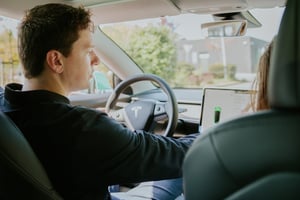
When you lease a Tesla with Leasebooking, you can choose from two advanced software options: Autopilot or Full Self-Driving (FSD).
Every new Tesla comes standard with Autopilot — an intelligent driver-assistance system that automatically steers, accelerates and brakes for other road users in the same lane.

But Tesla goes further than that. With Full Self-Driving you get extra features that make your car ever smarter. Thanks to continuous software updates, the system improves itself so your Tesla will eventually be able to drive fully autonomously.

Every Tesla with this software stays up to date thanks to over-the-air updates. Add FSD to your contract now and make your car fully future-proof.

Current Full Self-Driving features:

  • All Basic Autopilot features
  • Navigate on Autopilot
  • Auto Lane Change
  • Autopark
  • Summon
  • Traffic Light & Stop Sign Control
  • Autosteer on City Streets (coming in the future)
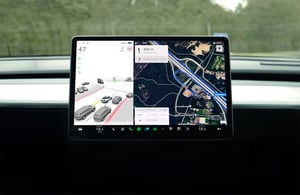
FSD wide

BENEFIT-IN-KIND TAX TESLA BUSINESS LEASE

How does benefit-in-kind tax work for a Tesla business lease?

You will pay benefit-in-kind tax if you drive more than 500 private kilometres per year. As of 1 January 2024, the benefit-in-kind rate is 16% for electric cars. This percentage applies to the list price of the electric car up to a threshold of €30,000. For the part of the list price above €30,000, a benefit-in-kind rate of 22% applies.

What exactly is benefit-in-kind tax?

Benefit-in-kind tax on a business lease car is a scheme that applies to employees who use a company car privately. It means that as an employee you must add a certain amount to your income, the so-called benefit-in-kind, because of the private use of the car.

What counts as business kilometres and which kilometres count as private?

Business = kilometres for commuting.

This also includes kilometres you drive during a working day, for example when you drive between your workplace and home for lunch. However, extra kilometres you drive to or from work for private reasons are not considered business kilometres.

Private = kilometres for personal purposes.

Kilometres driven in a company car for personal purposes, such as shopping or holidays.

How is the amount of benefit-in-kind tax determined?

Benefit-in-kind tax is calculated based on the list price, the car's CO2 emissions, your income and your tax bracket. For a new car, you may use the benefit-in-kind scheme that applied in the year the car was registered for 5 years (60 months).

How can I limit benefit-in-kind tax?
There are four ways to reduce benefit-in-kind tax. This can be achieved by:
• Demonstrably limiting private kilometres to a maximum of 500 kilometres through a complete trip log
• Choosing a car with a lower benefit-in-kind rate, such as a Tesla.
• Making a personal contribution for private use.
• Choosing a car with the lowest possible tax value.
How do I keep track of my private kilometres for benefit-in-kind tax?

You can do this in several ways:

  1. Trip log: Keep a detailed trip log in which you record every journey with the car, including the date, start and end odometer readings, starting point, destination and purpose of the trip (business or private). This is the most accurate method and is usually accepted as evidence by the Dutch Tax Administration.
  2. Mileage tracking apps: Use special mobile apps designed to record your trips automatically. These apps use GPS technology to track your trips and may have useful features such as categorising trips as business or private.
  3. Recording odometer readings: Regularly record your car's odometer readings, especially at the start and end of the year. This can serve as an indication of the number of private kilometres driven, but it is less accurate and may be considered less reliable by the Tax Administration.
How does submitting my private kilometres for benefit-in-kind tax work?

Submitting your private kilometres for benefit-in-kind tax is usually part of your tax return. Here are the steps you can follow:

  1. Collect evidence of your private kilometres: Make sure you keep a detailed trip log or have other relevant documentation showing how many private kilometres you drove during the tax year.
  2. Fill in your tax return: When filling in your tax return, specifically the section on the car's benefit-in-kind, you must provide the requested information. In general, you will be asked for the total number of kilometres driven and the number of private kilometres.
  3. Don't forget corrections: In some tax systems you may need to make corrections to the benefit-in-kind, for example if you make a personal contribution for private use or if the car was not at your disposal for certain periods. Follow the instructions in the tax return to report any corrections.
How does the Tax Administration check the declared private kilometres?

The Dutch Tax Administration carries out various forms of checks:

  1. Number plate scans: This is a commonly used check by the Tax Administration. They randomly scan number plates, for example in car parks at shops or amusement parks, to check whether benefit-in-kind tax is being paid for the car or whether a declaration has been signed. For example, if a car is scanned at the Efteling on a Saturday, this may lead to a further check of the trip log.
  2. Random checks: The Tax Administration can also carry out random checks in which they request the trip log without a specific reason. This lets them check whether the trip log is correct, whether no more than 500 private kilometres are driven and whether the nature of the trips is correct. To support the latter, the Tax Administration may also ask for diaries, fuel receipts or garage receipts. So make sure you have this information at hand in case of a check.
  3. Other checks: In addition, the Tax Administration can also carry out general audits at companies, during which they also check the vehicle records.
What are the consequences if my declared private kilometres are incorrect according to the Tax Administration?

Incorrect mileage records can result in a default penalty. If the benefit-in-kind for private use is not applied correctly or the mileage records are incorrect, the driver may face a default or offence penalty. The amount of the penalty can vary depending on the seriousness of the situation and the driver's intent.

  • Default penalty: If benefit-in-kind tax was wrongly not taken into account, the Tax Administration imposes a default penalty on the driver. This penalty is €4,222 (80% of the maximum penalty of €5,278). With incorrect mileage records, the penalty can rise to €5,278. In cases of intent or gross negligence, an offence penalty may even be imposed.
  • Offence penalty for gross negligence: In cases of gross negligence, the offence penalty is set at 40% of the total amount of benefit-in-kind tax that should have been paid. If there is demonstrable intent, the offence penalty can rise to as much as 80%. In the case of incorrect mileage records, the Tax Administration can increase the penalty to 100%. However, imposing a higher penalty requires the tax inspector to consider the case serious enough after investigation.

Do you have questions or want to contact Leasebooking directly?

Feel free to contact us, we are happy to help.

Schedule an appointment with our team

Call us or fill in the form. We're here for you.